Sahara Hotnights – No One Ever Really Changes | HYMN

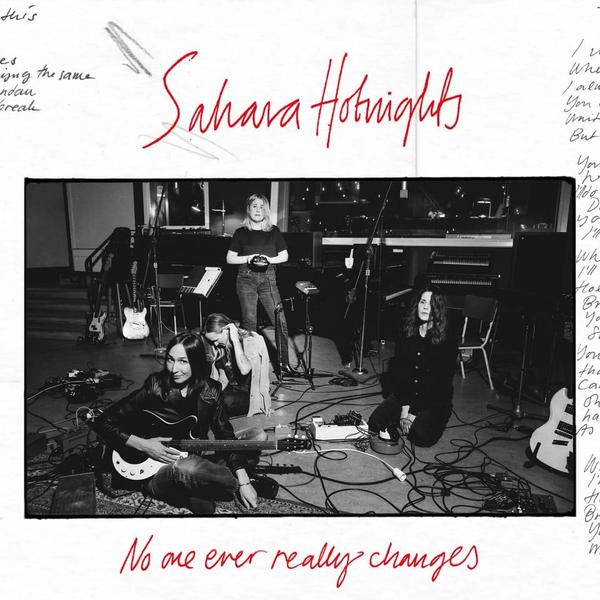
Tidigare i år valdes Sahara Hotnights in i Swedish Music Hall of Fame. Nu är de tillbaka med albumet No One Ever Really Changes som de följer upp med en klubbturné.Redan efter första låten är det tydligt: Det gäller inte bara människor. Även tiden tycks ha stått still. Eller snarare: Jag har förflyttats rakt tillbaka in i 90-talet, till distade gitarrer, rock med punkattityd.Enligt bandets frontfigur Maria Andersson kretsar plattan kring vår strävan efter förändring och den obekväma insikten att...

Sabrina Carpenter – Man’s Best Friend | HYMN

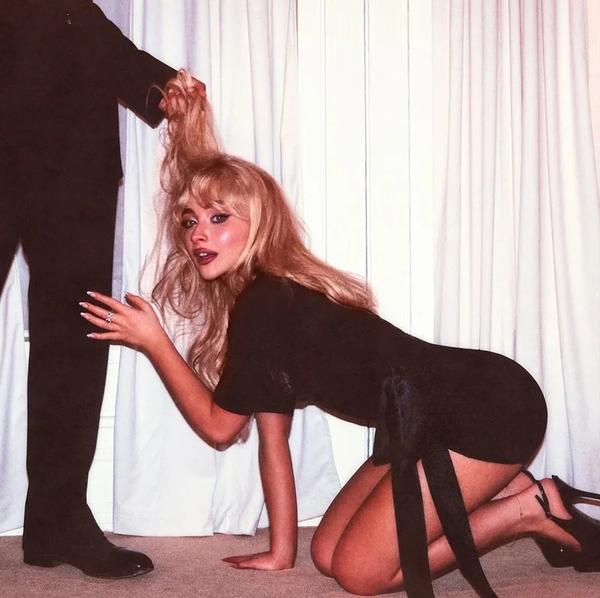
Sabrina Carpenter är aktuell med sitt nya album, Man’s Best Friend, släppt den 29 augusti. Här skakar hon av sig bubblegum-poppen och flörtar istället med countryinfluerade toner.


Disney-prinsessan Sabrina, har lämnat det sockersöta bakom sig. I stället kliver hon in i ett mer vuxet språk och en stil som lutar mot country-pop – något vi ser många artister faktiskt göra just nu.Ta Taylor Swift till exempel: hon gick ju motsatt väg, från country till pop. Samtidigt har R&B-drottningen Beyoncé n...

”Don’t Look Back in Anger — Unless You’re a Gallagher”

I grew up in the 80s & 90s, with vinyl and cassette. My heart never left the 80s, I was shaped by guitar solos, grunge screams, Britpop dreams & art-pop ghosts.

I wanna talk a little about Oasis, their reunion, and what they ment to me & and I’m sure, my whole generation..

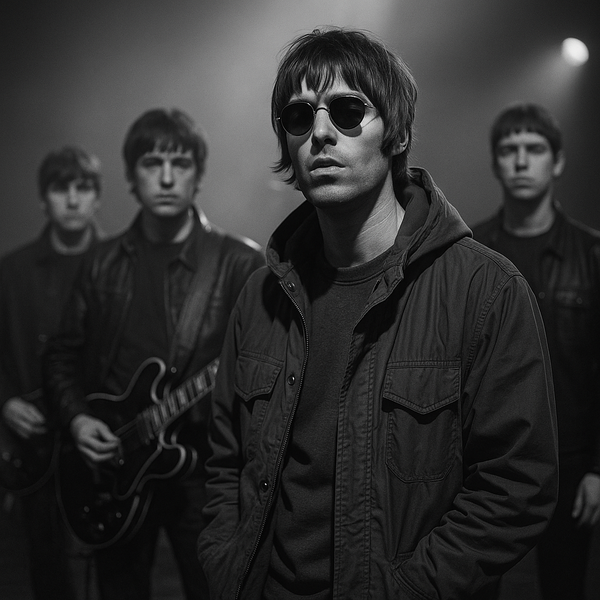
Oasis — back, thirty years later, and the question still lingers like it did in ’95: What’s the Story, Morning Glory?
Their chaos made noise — but their songs made history.

I grew up in Åmål — a small Swedish town best known for a 1998 film with a title ”Fucking Åmål”. We weren’t Manchester, but we had our own kind of grit — kids who thought we could live forever. And if Oasis can come back thirty years later and still rock the stage like they never left, maybe we all can.

Just like the chaos of Britpop and 1990s Manchester, Oasis became a kind of rebellion and relief.
I didn’t just listen — I lived it.
My skin says in ink, what I never stopped being: A Rebel

While the rest of the world had moved on to CDs, I was still spinning vinyl at home and rewinding cassettes on the go. Side A was “Wonderwall.” Side B, “Don’t Look Back in Anger.” I knew exactly when to flip — my own analog playlist.

Oasis didn’t just play rockstars — they lived it.
Hotel brawls. Blown interviews.
Noel walked out mid-tour. Liam got arrested in Germany after a drunken fight with police.
They weren’t hard to write about — every journalist’s dream, really.
Maybe that’s why we believed them. Still do. Nothing about Oasis was clean — it was real. And every note hit something true.

As a songwriter, I can tell you — lyrics don’t hit unless they’ve been lived.

Oasis is calling it a reunion — summer stadium tour or not, they´re back, never really been gone.

The thing is, real legends don’t ever leave.

They echo forever.

The Poet Is Still the One Holding the Pen

AI is everywhere. In headlines. In studios. In whispers of panic from creatives afraid of being replaced. Is it a tool? A threat? Is it writing your next hit — or writing you out of the industry?

Right now, we’re in limbo. The laws haven’t caught up, and most people don’t know where the lines are drawn. But the question isn't just legal — it’s artistic. Who’s really creating the song? Who’s in control?

People are afraid of new things — and I get it.

It’s natural. It’s in our DNA to meet change with suspicion. But what if we approached it differently? What if, instead of fearing the unknown, we learned how it worked — learned to use it? Not to replace what we do, but to help where we fall short. To support the parts of the process we can’t do alone.

Let’s say a songwriter has a lyric. A melody. A vision. But they’re not a producer. They don’t know how to build a full track on their own — at least not yet.

In that case, using an AI tool like Suno could be a way to bring that vision to life. To hear how their idea might sound fully produced. To shape dynamics, test arrangement, and prepare something pitch-ready. It’s not about asking AI to write for you — it’s about using a tool to enhance your own creativity.

But that AI-generated version? It can’t be released. Not on streaming platforms. Not commercially. It’s a demo, not a master. To release it properly, you’d still need to reproduce everything from scratch — with a human producer, with real vocals, with real intention. Use AI as only a tool for ideas, not to create full songs.

AI systems like Suno are trained on copyrighted content and can memorize and reproduce recognizable melodic patterns—even if you change instruments or vocal style. Courts have found AI-generated music can too closely mimic copyrighted works, risking infringement. Major labels—including Universal, Warner, and Sony—are suing Suno and Udio AI for training on copyrighted recordings and producing near-clones of existing songs.

Only a human can hold copyright. Only a human can own a song. A prompt can’t feel heartbreak. A loop doesn’t carry grief. A button can’t write your truth.

And AI? It won’t make you better. If your lyrics are shallow, they’ll still be shallow. If your melodies don’t move people, AI won’t fix that. It’s not an A&R. It’s not a muse. It’s not magic. It’s a mirror — it reflects what you give it. It might sound like a hit — but if there’s no story, no feeling, it still won’t matter.

Because a hit is more than production. It’s a story. It’s a feeling. It’s timing. It’s the artist behind it.

The right way to use AI in music isn’t to replace the human voice. It’s to support it. Clarify it. Shape what’s already there. To take the spark — and help it become a flame.

And at the end of the day, if you’re the one who wrote the lyrics, if you’re the one who shaped the melody, if the idea is yours from the start — then it’s still your song.

Because the poet is still the one holding the pen.
Tough going for songwriters in Japan

The Asian market is getting more and more important for international songwriters. The Asian share of the worldwide music market is growing, both in size and importance.
There are a lot of “songwriting camps” where professional songwriters meet, collaborate and write songs that are aimed for “pitching” to artists in Japan and Korea. They are usually held for a few days but the tempo and expectations are high.
So what does “pitch” means? When you “pitch” your music, you send your song to an A&R...